Treating Snake Bites with Vitamin C
For many years, Anne-Louise Evans has had an interest in the use of vitamins, minerals and natural medicines for the treatment of illness and physical and emotional issues. Recently, she was able to see first-hand the efficacy of treating snake bites naturally with vitamin C.
THE USE OF VITAMIN C FOR SNAKE BITES
Hello! My name is Anne-Louise Evans! For at least sixteen years I have had an interest in the use of vitamins, minerals and natural medicines for the treatment of illness and physical and emotional issues.
Recently, I was able to see first-hand the efficacy of treating snake bites naturally with vitamin C.
In May this year (2020), a friend, who is incidentally, a vet, phoned in a panic as her dog had been bitten by a Puff Adder here in Ashburton, and as she was in lockdown in Cape Town at the time needed our help. My husband and a mutual friend rushed the dog off to a local vet. My husband came back later with blood on his shirt from carrying the dog into the surgery and told me he did not think the dog would make it. In the meantime, our local Snake Man, Pieter Potgieter, came to the property and removed the (rather large) Puff Adder who was suspected of killing one of the owner’s dogs a few months previously.
Knowing that Pat Coleby, author of several books including Natural Pet Care, and Natural Horse Care advocated the use of vitamin C in snake bites through her books, I quickly photographed the relevant pages, and sent them to my friend in case she wanted to try this relatively unknown, but well-tested therapy. It turned out she did, and in collaboration with the vet in Pietermaritzburg, the dog was started on a course of vitamin C which was to last several days.
The dog remained at the surgery from the 16th to the 20th of May when we picked him up. We were astounded to see him bouncing along on the end of a lead and on the ride back he seemed relaxed and happy. Not, to my mind, a dog that showed signs of having been bitten by a Puff Adder only four days previously. You only have to look at photos and videos on the internet to see the devastating effect that poison, such as Puff Adder venom, can have on the flesh. They are not for the squeamish! This makes this case all the more amazing.
According to the African Snake Bite Institute, about 11% of the 173 species of snake found in South Africa are deadly. Of these, the Mozambique Spitting Cobra accounts for the majority of serious bites, followed by the Puff Adder in second place, then the Stiletto Snake and the Rhombic Night Adder respectively. Puff Adder venom is cytotoxic or cell-destroying, that is, it is responsible for the death of blood vessels and tissue. The venom causes extreme pain, swelling, blistering and severe tissue damage which may result in the loss of digits or limbs.
Snake bites can happen so quickly that you may not even be aware initially that you have been bitten. Often a bite will come from a single fang, and or may only leave a scratch with some bleeding. Apparently, you will not often see the characteristic double puncture wound that we have come to expect. Pain is immediate, followed by swelling, moving up the limb and may thereafter affect the lymph gland. This is true of both the Puff Adder and the Mozambique Spitting Cobra. In many cases, you will see blistering, discolouration around the wound, and necrosis, the death of muscle tissue. Shock can cause nausea, pain and difficulty breathing.
In this particular case, the dog was bitten on the chest between the front legs. Dogs commonly get bitten on the chest or on the face as they approach the snake aggressively and are low to the ground. Humans more usually get bitten on the lower leg. Puff Adder venom is slow-acting, and usually takes about 24 hours to cause death if left untreated, or if treatment is unsuccessful. Victims have been known to die sooner, and fatalities have been recorded within 30 minutes. Fatal bites are usually caused by complications associated with extensive swelling or kidney failure.
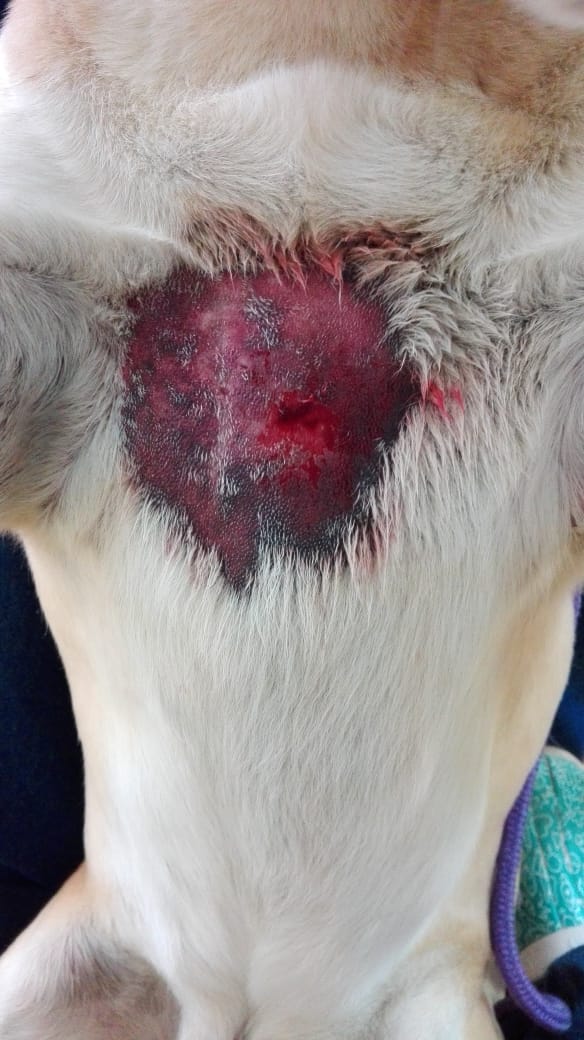
As you will see when looking at the photos taken at intervals during the treatment of this particular dog, Photo 1 taken soon after the dog was bitten, shows deep discolouration around the site of the wound.
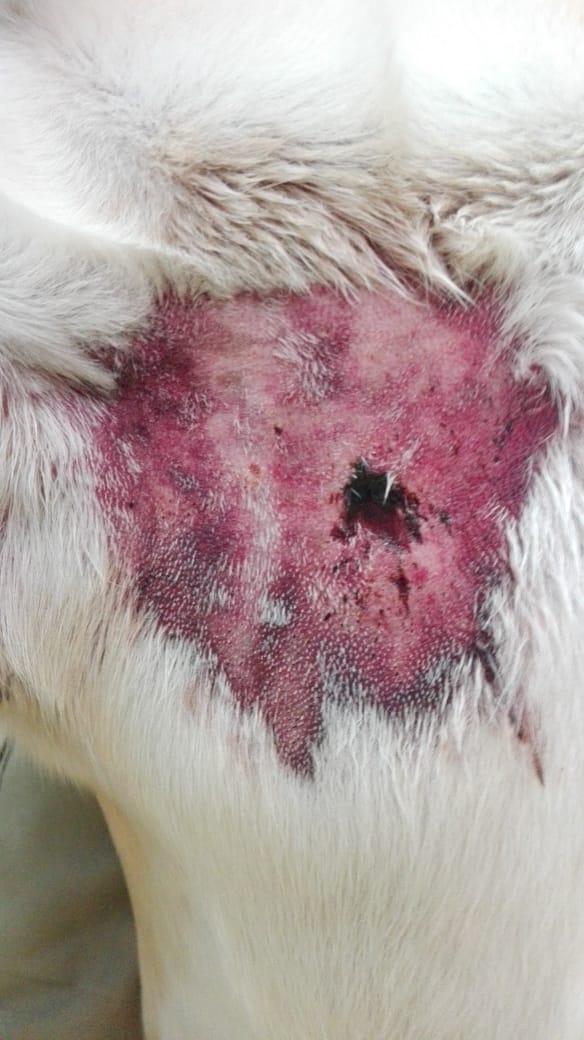
Photo 2, taken the next morning, and following the start of treatment with vitamin C shows a startling improvement in the colour of the skin. At this point, the extent of sloughing of the dead tissue, still to come, is unknown.
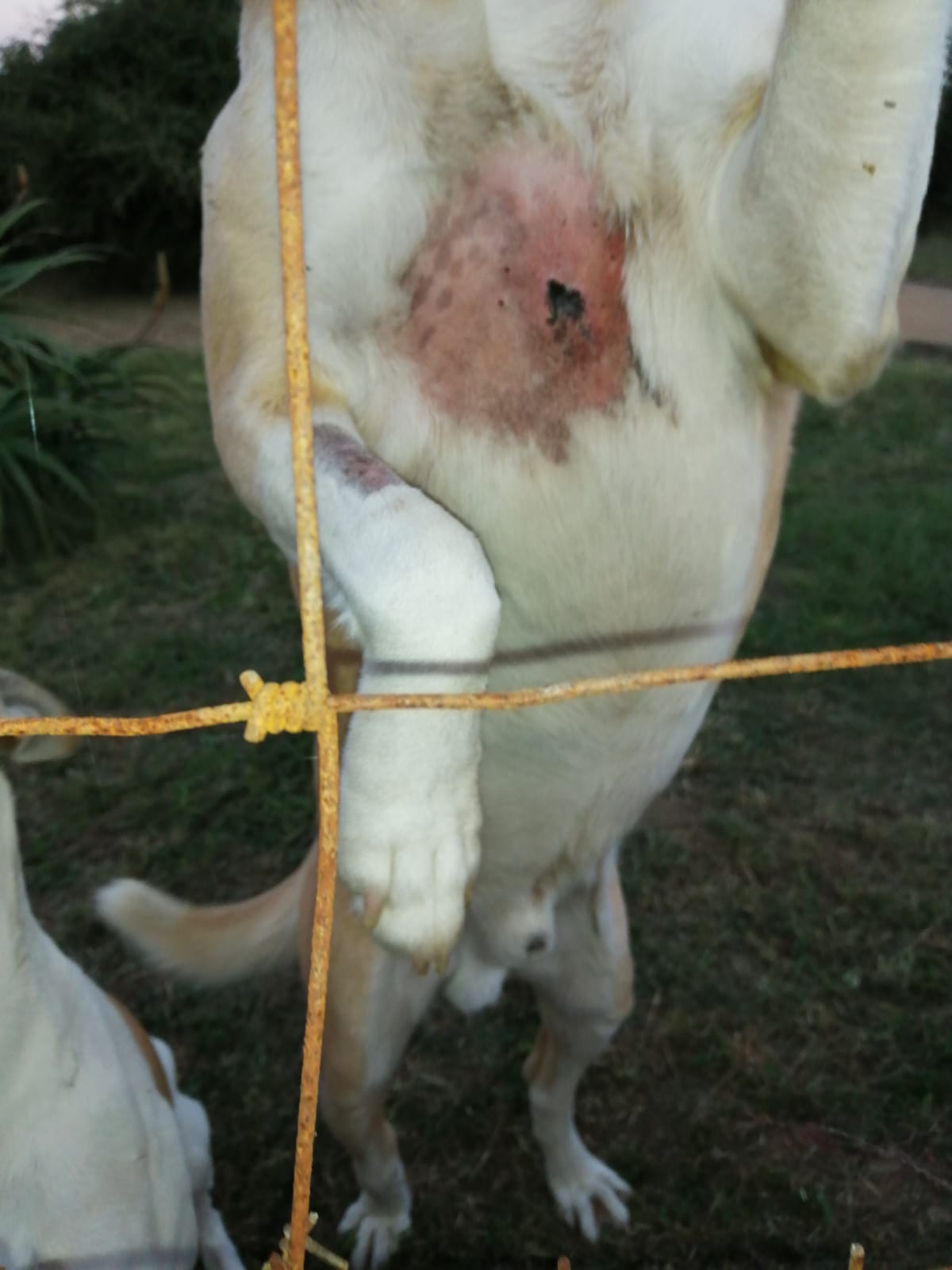
Photo 3 taken by myself on the 23rd of May, just seven days later, shows no evidence of sloughing and the vet found it interesting that there was no necrosis around the site of the wound itself, but where the venom drained to which was minimal.
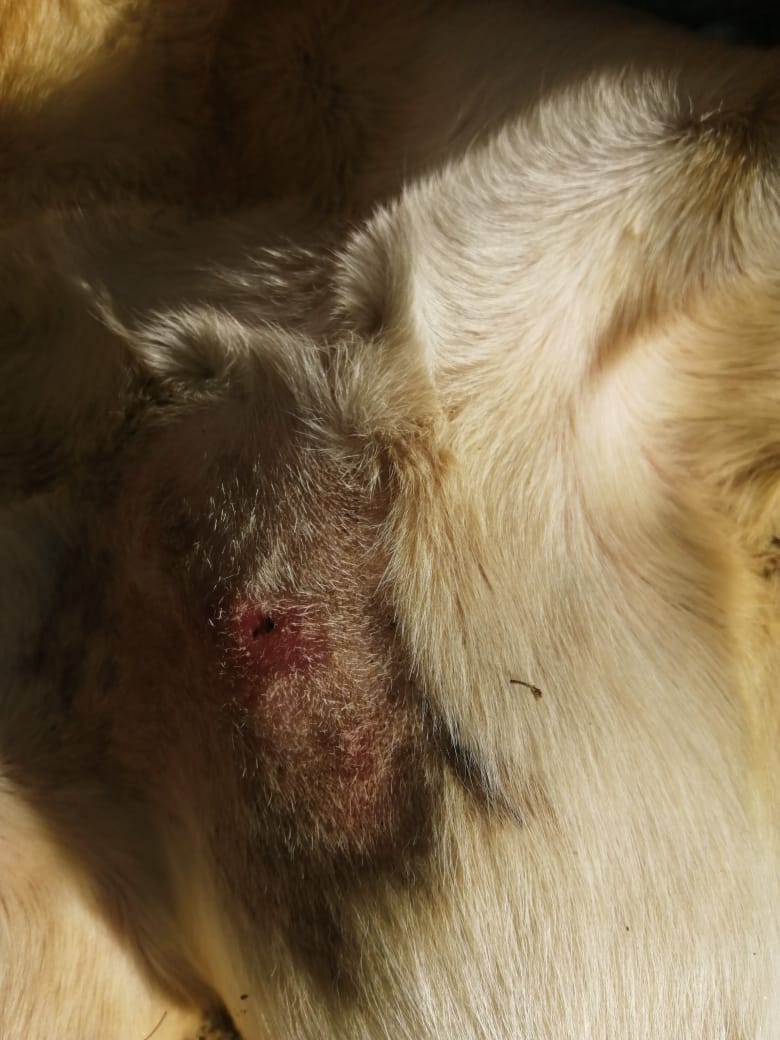
Photo 4, taken by myself on the 28th of May, twelve days after the incident, shows the hair growing back over the wound site. There is no swelling and the wound is almost closed. I was surprised when I saw the photo as the wound seemed a lot smaller to the naked eye.
In the Vet’s opinion, recovery was “unbelievably fast”.
VITAMIN C & SNAKE BITES
Vitamin C can be used to cure snake and spider bites and even as an antidote depending on the poison. According to Pat Coleby, it works slightly faster than antivenom and there is no risk of anaphylactic shock. This makes vitamin C an essential for your First Aid Kit, especially in areas such as Ashburton where snakes are common!
In the case of shock, if given quickly enough, vitamin C will prevent shock from happening at all, and as we all know, shock has the potential to kill.
Many years ago, I had a bushbuck called Milkshake who was chased by a dog who climbed the fence from the road into our property. When I got to her, she was in a state of shock. I rushed her to the vet and in her panic on seeing the vet, she promptly struggled and kicked out, neatly removing all the buttons from the front of my shirt! I could have certainly done with a treatment of vitamin C for her that day!
Pat once treated a pony who had been bitten on the nose by a Tiger Snake and was almost moribund. The animal was unable to move and was having great difficulty breathing due to pneumonia. Pat happened to have a 30 ml bottle of vitamin C, half of what she would have liked, so she put half of the bottle into each side of the neck by intramuscular injection. Within a few hours it was happily grazing in the garden. The pony’s blood was later found to have the largest amount of Tiger Snake venom the Vet had ever seen in an animal.
Although many animals (unlike humans) manufacture their own vitamin C, during any stress such as illness, racing, travel, poisoning or an accident, demand may exceed supply. The adrenal glands require vitamin C (with B5) to assist them in maintaining their normal output of cortisone which is why we increase the supply of vitamin C during trauma when extra cortisone is usually needed.
Vitamin C is currently being used in the treatment of many illnesses and can be almost miraculous in its effects. Vitamin C has even been used to reverse cancer in dogs.
Doctor Bellfield, a veterinary surgeon from California uses vitamin C in large doses (up to 200 g intravenously daily) for conditions that have in the past been considered incurable, or even fatal, such as hip dysplasia and viral hepatitis.
Pat has used vitamin C in many situations – for tetanus following a car accident, a dog in a tick coma, a dog with Parvo, all with complete success.
Vitamin C can be used as an antibiotic and will control viral infections if given in large enough amounts.
Vitamin C will prevent post-operative trauma enabling the patient to wake up calmly. Horses, especially are known to react badly to anaesthetics and in some cases, have even died from it. After an operation, horses are generally put in a padded room with a deep bed to recover as they can injure themselves quite badly thrashing about as they wake up. Using vitamin C will in no way reduce the effect of the anaesthetic and will speed up healing and prevent bruising.
According to Dr Thomas E. Levy, MD, JD, author of Curing the Incurable: Vitamin C, Infectious Diseases, and Toxins there is a large body of scientific documentation proving the curative powers of vitamin C. Dr Levy states:
“There hasn’t been a toxin to which vitamin C has been introduced that it hasn’t neutralised.”
Let me say that again:
“There hasn’t been a toxin to which vitamin C has been introduced that it hasn’t neutralised”
There are several types of vitamin C including Ascorbic Acid powder, sodium ascorbate, potassium ascorbate, calcium ascorbate and zinc ascorbate. However, Sodium ascorbate administered as a powder or an injection (intravenously or intramuscularly) is the preferred way of treating small animals and most large animals too. - • Vitamin C is easily administered by injection, either intravenously or intramuscularly, but can just as easily be given orally if this is all that is available. Pat tells of a lady who was so upset when her dog was bitten by a snake that she could not give the injection and instead poured the contents of the bottle down her dog’s throat! If you have vitamin C tablets, those will also do!
- • Vitamin C can be stored in the fridge so it is immediately available in an emergency, particularly on weekends when a vet may not be immediately available. One should also carry a bottle when walking in the bush. You never know when you might need it.
- • Vitamin C helps the adrenal glands maintain their normal output of cortisone – this is why we increase the supply of vitamin C to any pet that has undergone trauma which is when additional cortisone is usually needed.
- • Vitamin C is water-soluble and cannot be stored. Any excess leaves the body via the urine. It is therefore quite safe for the layman to use.
- • The only known side effect of large doses of vitamin C is diarrhoea and when this point is reached, the animal has taken all it can absorb. This is a great indicator of the correct dose for that particular animal.
- • Vitamin C will not cause anaphylactic shock like some anti-venoms
TREATMENT FOR SNAKE BITE
For treating snake bites, the injection is preferred, but vitamin C powder or tablets will work just as well in an emergency. Treatment should be given as quickly as possible: the longer the venom is in the system, the greater the residual effects.
A second treatment should always follow the first not more than an hour later even if the animal appears to be recovering. Treatment with vitamin C should continue for several days.
Powdered Sodium ascorbate is nearly tasteless and therefore quite palatable mixed with milk or food, especially for cats who can be quite picky. It also does not curdle milk which is useful if handfeeding a foal.
Vitamin C can be rather glutinous so a Size 19 needle or larger is recommended. Given intramuscularly, it can be a painful injection for the first 20 seconds unless your pet is very ill, however this can be a very good indicator of how your pet is progressing.
Sodium ascorbate powder (never Ascorbic acid) can also be dissolved in distilled water for injection using proper sterile procedures. A teaspoon of powder equals about 5 g.
Small dogs should be given 10 ml vitamin C by injection – Sodium ascorbate is preferred whether injecting intramuscularly or intravenously.
Failing this, the animal can be given two teaspoons of vitamin C or five or six 1 g tablets crushed - and keep doing it.
Larger dogs can be given four to six times that amount.
Horses can be given 50 ml (25 g) by injection.
As you can see, vitamin C has many uses and needs to be looked at with an open mind as it is certainly more than just a vitamin.
We intend bringing out a range of natural medicines for animals in the near future and will update this site with details should you require more information.
Stockists
VITAMIN C POWDER (SODIUM ASCORBATE)
Available from Health shops and online from the following web sites:
Faithful to Nature
Gaia Organics Buffered Sodium Ascorbate Vitamin C Powder 100g R170.00
www.faithful-to-nature.co.za
Gaia Organics
Sodium Ascorbate Vitamin C Powder 100g R 172.50
Sodium Ascorbate Vitamin C Powder 500g R 862.50
www.gaiaorganics.com
VITAMIN C INJECTABLE
Speak to your Veterinarian
Bibliography
Coleby, Pat, Natural Pet Care, Hachette Australia 2009
Coleby, Pat, Natural Horse Care, Hachette Australia 2008
Levy, Dr Thomas E, MD, JD, Curing the Incurable: Vitamin C, Infectious Diseases, and Toxins, MedFox Publishing 2011
Marais, Johan, A Complete Guide to the Snakes of Southern Africa, Random House Struik
https://www.africansnakebiteinstitute.com/
Copyright © Anne-Louise Evans 2020
The opinions, beliefs and viewpoints expressed by the
various authors and forum presenters on this website do not necessarily reflect
the opinions beliefs and viewpoints the Ashburton Aloe Festival 2020 Goes
Virtual organisers, the Lower Mpushini Valley Conservancy or its
membership. We advocate for social and
environmental justice and optimum well-being for people and planet and
contextualise our concept within a local understanding of what it means to be
on that journey. Always consult with
your local doctor, veterinarian and alternative healing specialists when
undertaking new forms of therapy or medication.
It is outside of the expertise or scope of the Lower Mpushini Valley
Conservancy to make recommendations in this regard.